Information
Codelabs are a great way of walking new starters and employees through team processes and conventions.
The public Codelabs can be used to learn anything from Tensorflow through to using Cloud APIs.
This repo builds the Tools into a container that can be used to build a statically hosted image.
Walking through these steps will allow you build your own container and add your own Codelabs.
How it works
We use the Codelabs to build a base container, passing it into a multistage build that processes markdown files to build a final static hosted web folder in an nginx container.
Fork
You can use github to fork the repo into your own account.
Goto https://github.com/chrisguest75/codelab_example and fork
Clone
git clone https://github.com/chrisguest75/codelab_example
NOTE: If you choose to clone the repo then you need to set a new origin by removing the old one.
git remote remove origin
git remote add origin git@github.com:<account>/<repo>
git push
Building
To build the base container used to build the example codelabs. The base container will use the Codelabs repo. It will install some necessary tools (claat) and set a structure to process a set of markdown defined codelabs.
./build_base.sh
To rebuild the codelabs using the base container. It will also run and host on port 8000 for testing.
./build_codelabs.sh
Once running you'll need to map port 8000 using the preview on port feature of the GCP console.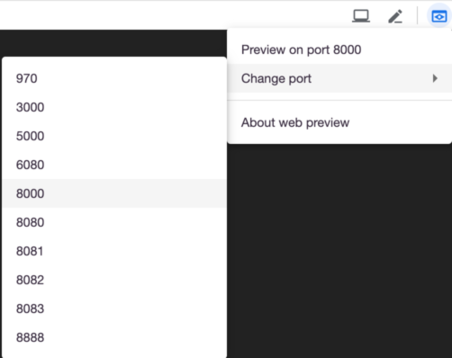
Now you should see a screen like the following.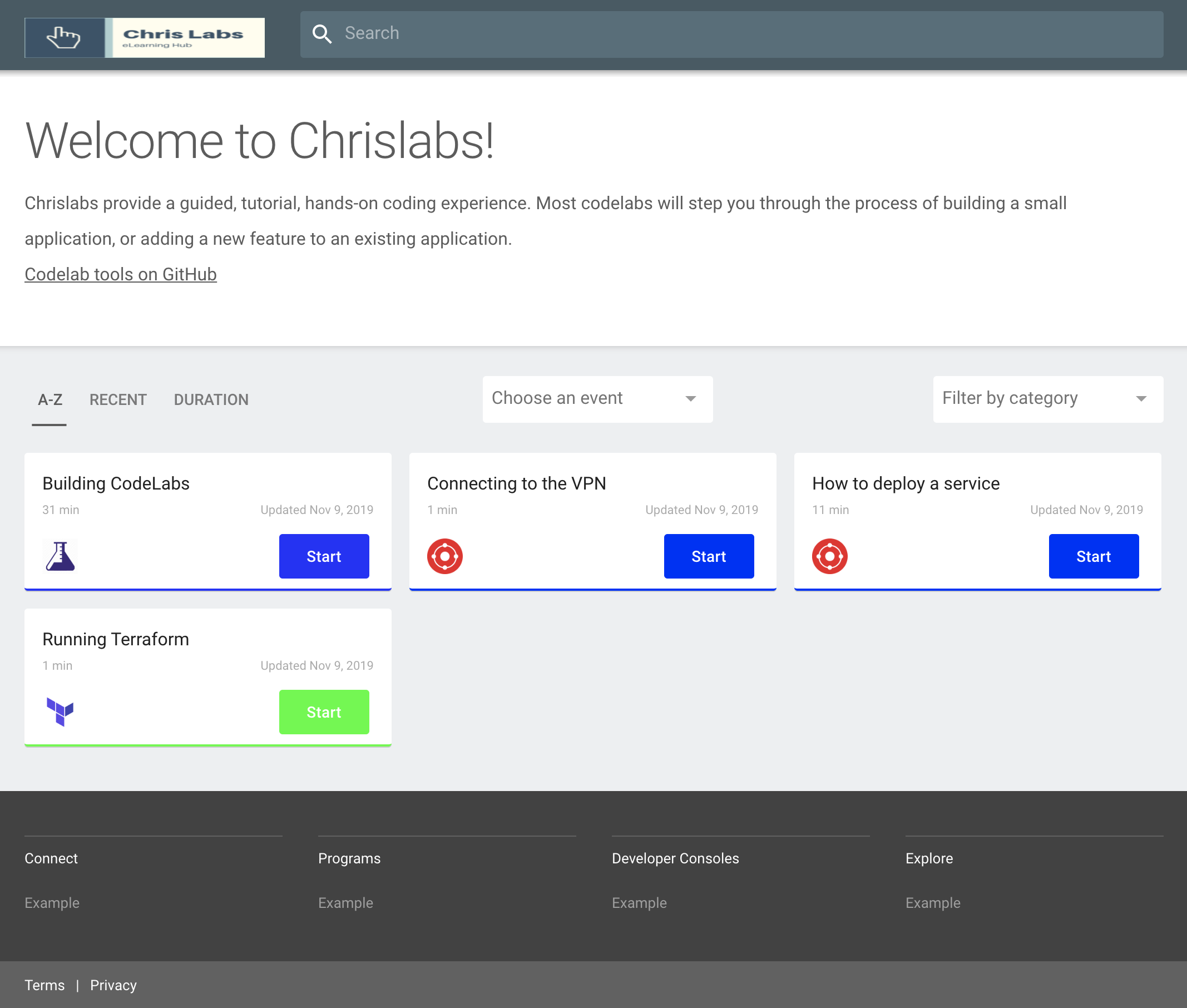
Pushing to GCR
We now retag the image for the GCR and push it. Cloud Shell is already authed for me. No docker login required.
docker tag codelabs:latest gcr.io/open-source-01/codelab_example/codelabs_cloudshell:latest
docker push gcr.io/open-source-01/codelab_example/codelabs_cloudshell:latest
Deploy to CloudRun
We can now deploy to Cloud Run.
gcloud beta run deploy codelabs --image gcr.io/open-source-01/codelab_example/codelabs_cloudshell:latest --region europe-west1 --platform managed
Building
Building with Cloud Build
gcloud builds submit --project open-source-01 --substitutions=COMMIT_SHA=test,BRANCH_NAME=cloudbuild,REPO_NAME=codelab_example
Key Skills
You have now build, hosted locally on the GCP console.